- HOURS, PRICES AND BUY TICKETS
- Coming Home Campaign
- News
- Events
- Support Us
- Membership
- Shop
- Member Login


Hayes was the 19th U.S. President serving from 1877-1881. He was also a Ohio governor, a U.S. Congressman and a General in the Civil War and loving husband to Lucy and father to eight children.

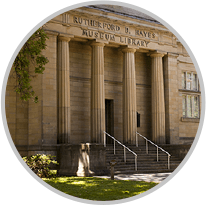
Honoring the memory of Rutherford B. Hayes, his family established the first presidential library open to the public in 1916. For 100 years the collections have grown beyond the core collection to include 90,000 books, manuscripts and images which reflect Hayes' special interests, including genealogy, local history, and the Gilded Age period in which he lived.

Spiegel Grove houses the Hayes Museum and 31 room mansion, along with 25 acres of park and the burial site of President and Mrs. Hayes.

Wednesday, October 21, 2026
The Hayes Presidential Library & Museums has a season of magical events for making memories. Get all the details here.
Partial funding for A Presidential Christmas is by Wright Leather Works.

Wednesday, October 21, 2026
Celebrate the holidays by riding through the wooded estate of President Rutherford B. Hayes in a horse-drawn sleigh or trolley during the week after Christmas.
Sleigh and trolley rides by South Creek Clydesdales will be offered from 1 to 4 p.m. Saturday, Dec. 26; Sunday, Dec. 27; Monday, Dec. 28; Tuesday, Dec. 29; Wednesday, Dec. 30; and Thursday, Dec. 31.
Wednesday, October 21, 2026
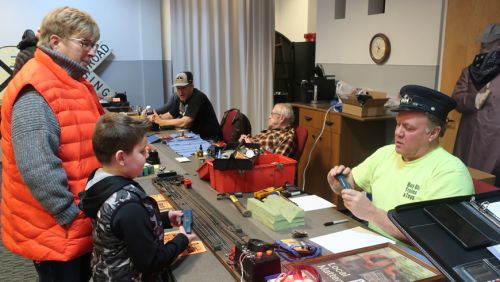
Do you need help troubleshooting some problems with your model train?
Or maybe you’re wondering how best to care for it?
Model train enthusiasts can help, and they’re offering two opportunities this holiday season at the Hayes Presidential Library & Museums.
Train clinics will be given from 11 a.m. to 3 p.m. on Saturday, Dec. 5, 2026, and Saturday, Jan. 2, 2027, in the museum auditorium.

Wednesday, October 21, 2026
ince 1994, model trains at the Hayes Presidential Library & Museums have delighted visitors of all ages throughout the holiday season.
The “Hayes Train Special” is a multi-tiered exhibit of model trains that wind through a winter wonderland reminiscent of President Rutherford B. Hayes’ day with interactive buttons that let visitors get involved with the display.
There are also several backdrops that offer great photo opportunities.
The display opens Friday, Nov. 27, and will be on exhibit through Sunday, Jan. 3, 2027.